You don't need to be an expert to understand what makes a great suit. Here's a simple guide to the key parts — so when you choose, you choose with clarity.
01
The Inner Structure
What's hidden inside makes all the difference
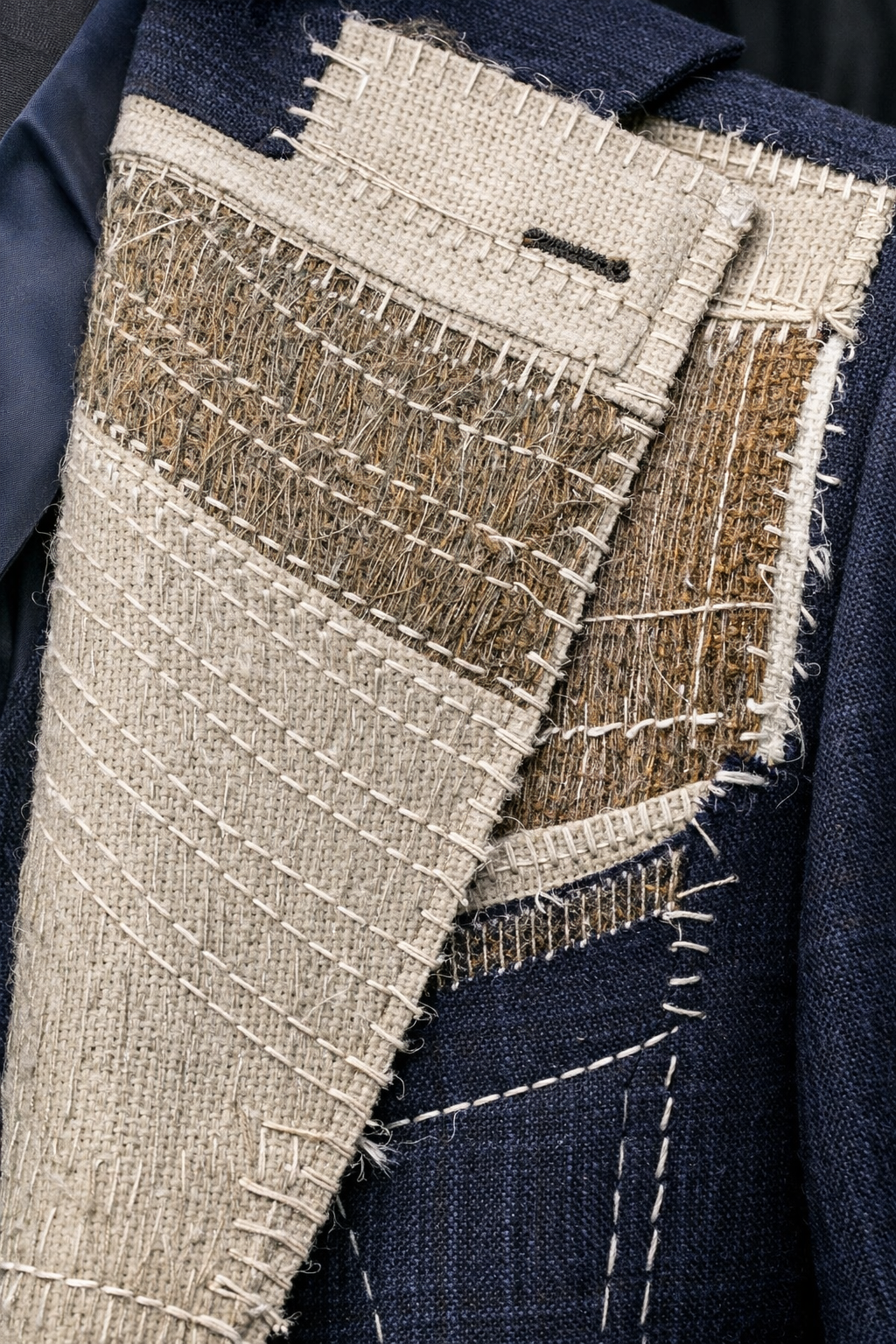
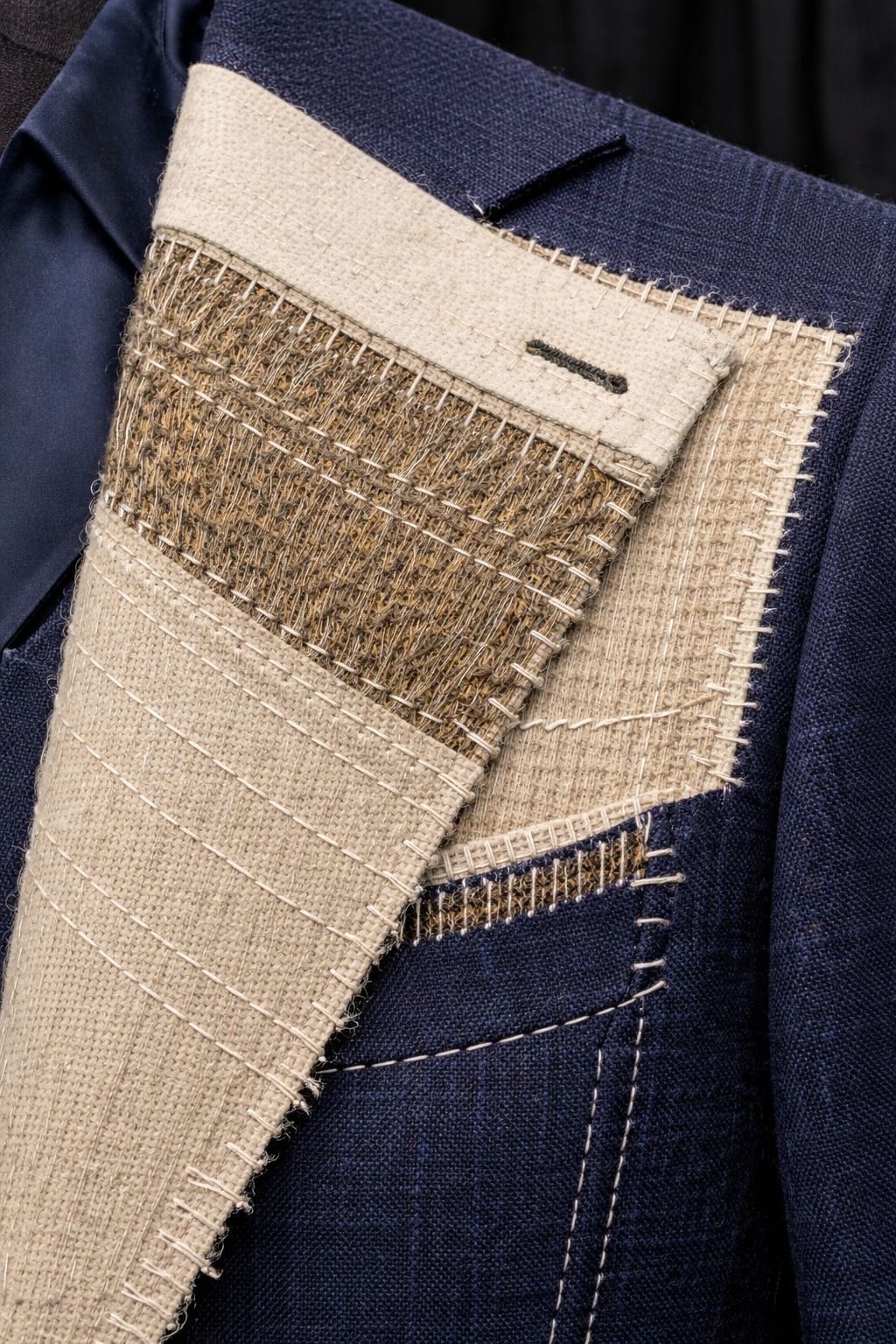
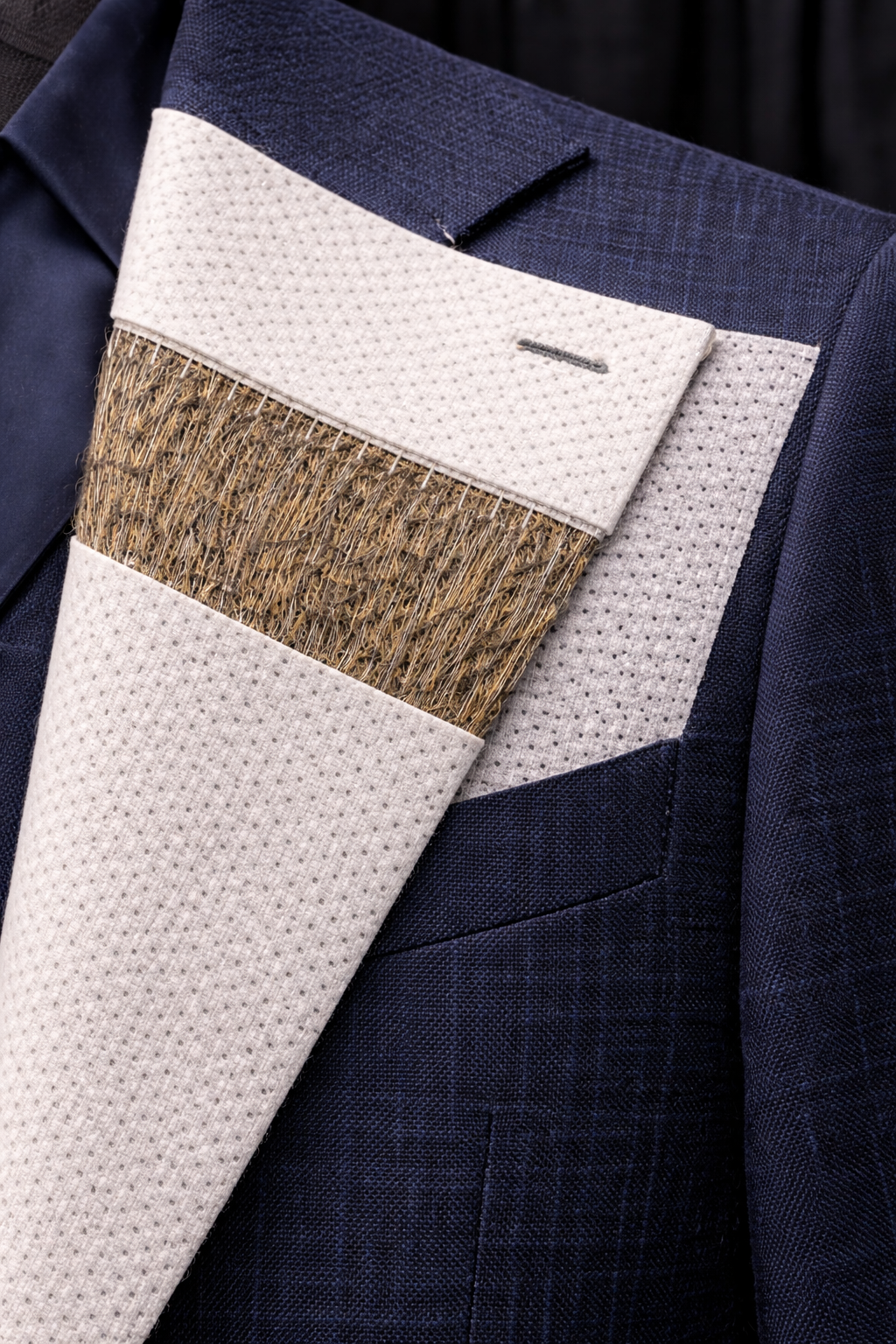
Every suit jacket has an inner layer between the outer fabric and the lining — and that layer decides how the jacket fits, feels, and ages. Think of it like the foundation of a house: you can't see it, but it holds everything together. There are three ways this can be built, from best to most basic.
Full Canvas
The gold standard. A layer of natural horsehair is hand-stitched throughout the jacket. It moulds to your body over time — the more you wear it, the better it fits. Lasts years.
Half Canvas
The smart middle ground. Canvas in the chest and lapels gives you structure where it matters most. The lower half uses a lighter method. Great quality at a more accessible price.
Fused
The inner layer is glued to the fabric instead of stitched. This makes it faster and cheaper to produce, but the jacket feels stiffer, doesn't breathe as well, and the glue can eventually bubble or separate.
A simple test
Pinch the front of any jacket between your fingers. If you can feel a separate layer moving freely inside — that's canvas. If the fabric feels stiff and stuck together — that's fused.
02
The Lapel
The fold of fabric that frames your face
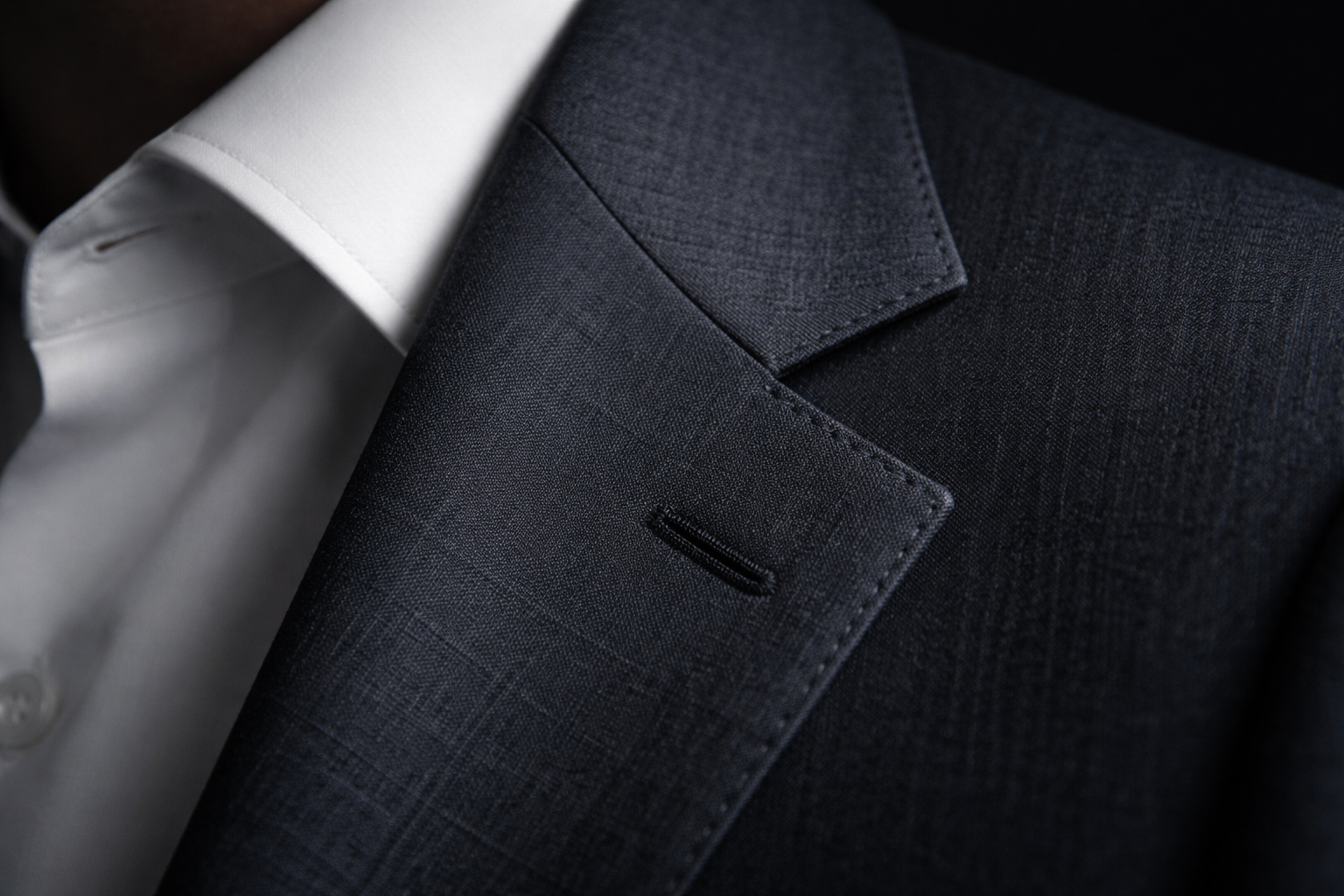
The lapel is the folded flap on either side of the jacket's opening, running from the collar down to the button. It's one of the first things people notice — and it sets the tone of the entire suit. There are three main styles, each with a different personality.
Notch Lapel
The most common style. There's a small V-shaped notch where the lapel meets the collar. It's versatile, works for business and casual, and suits most body types. If you're getting your first suit — this is the safe, timeless choice.
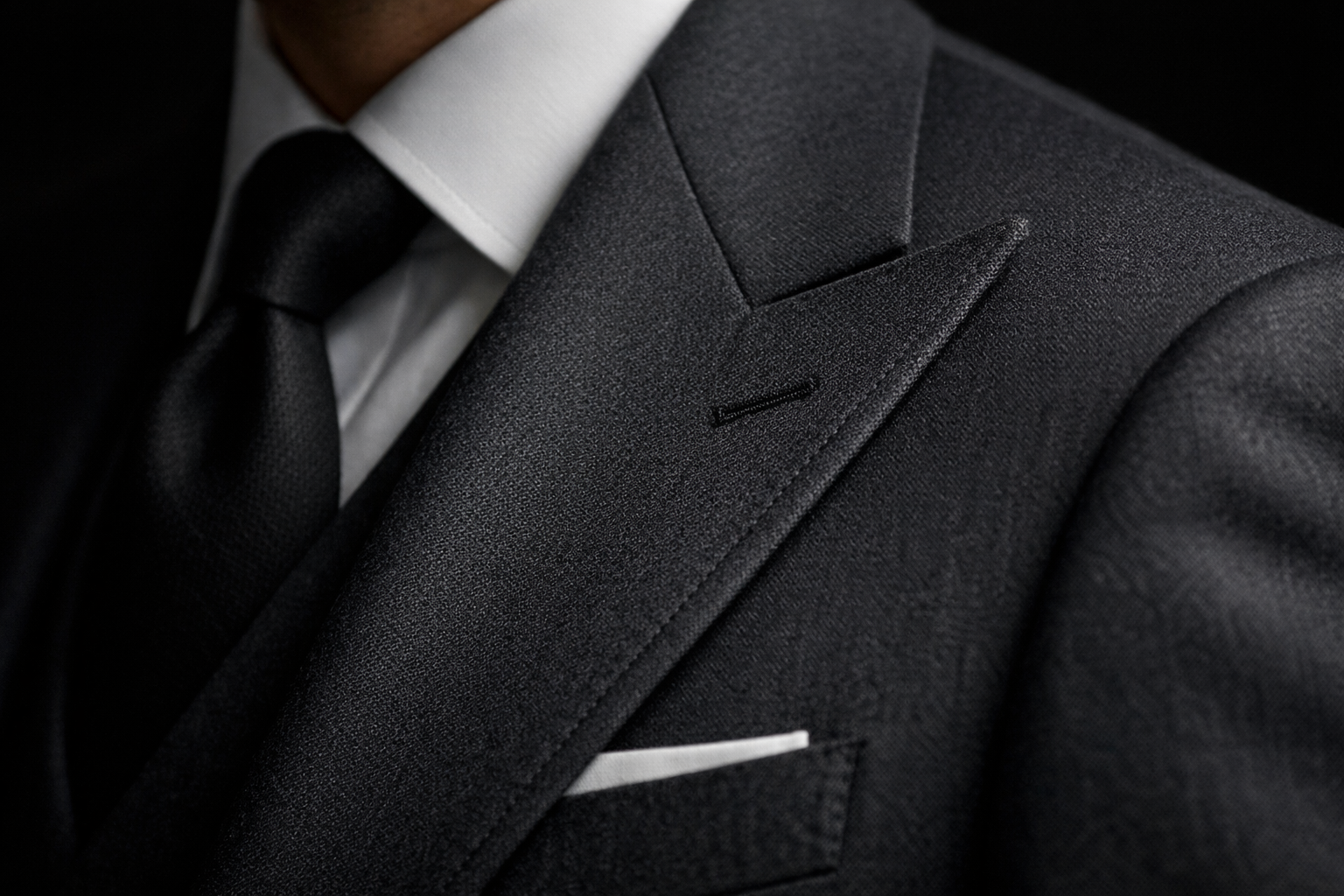
Peak Lapel
The lapel points upward and outward, creating a wider look across the chest. It has more presence and authority — think boardroom or wedding. It makes your shoulders look broader and gives the jacket a more powerful silhouette.
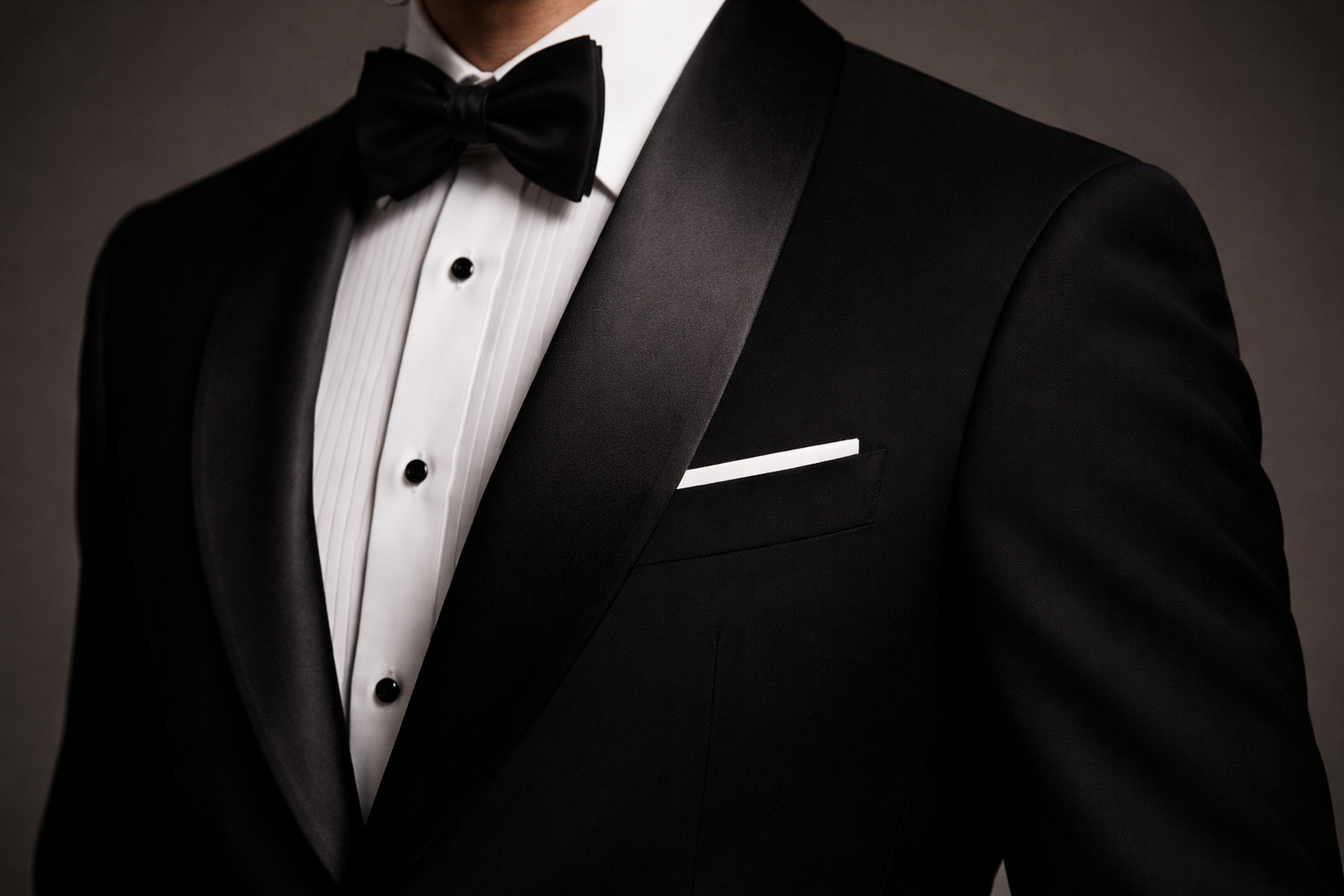
Shawl Lapel
A smooth, continuous curve with no notch or point — just a rounded edge flowing from collar to button. This is the evening-wear lapel. You'll see it on tuxedos and dinner jackets. Elegant, refined, and best reserved for formal occasions.
Width matters too
A lapel that's too narrow will look dated within a few years. Aim for 3 to 3.5 inches wide — that's a width that has looked good for decades and will continue to.
03
The Buttons
How many, and where they sit, changes everything
The number of buttons and where the jacket fastens (called the "buttoning point") directly affects how tall, slim, or broad you appear. It's not just a detail — it's the centre of the jacket's visual balance. The button is where your eye naturally lands first.
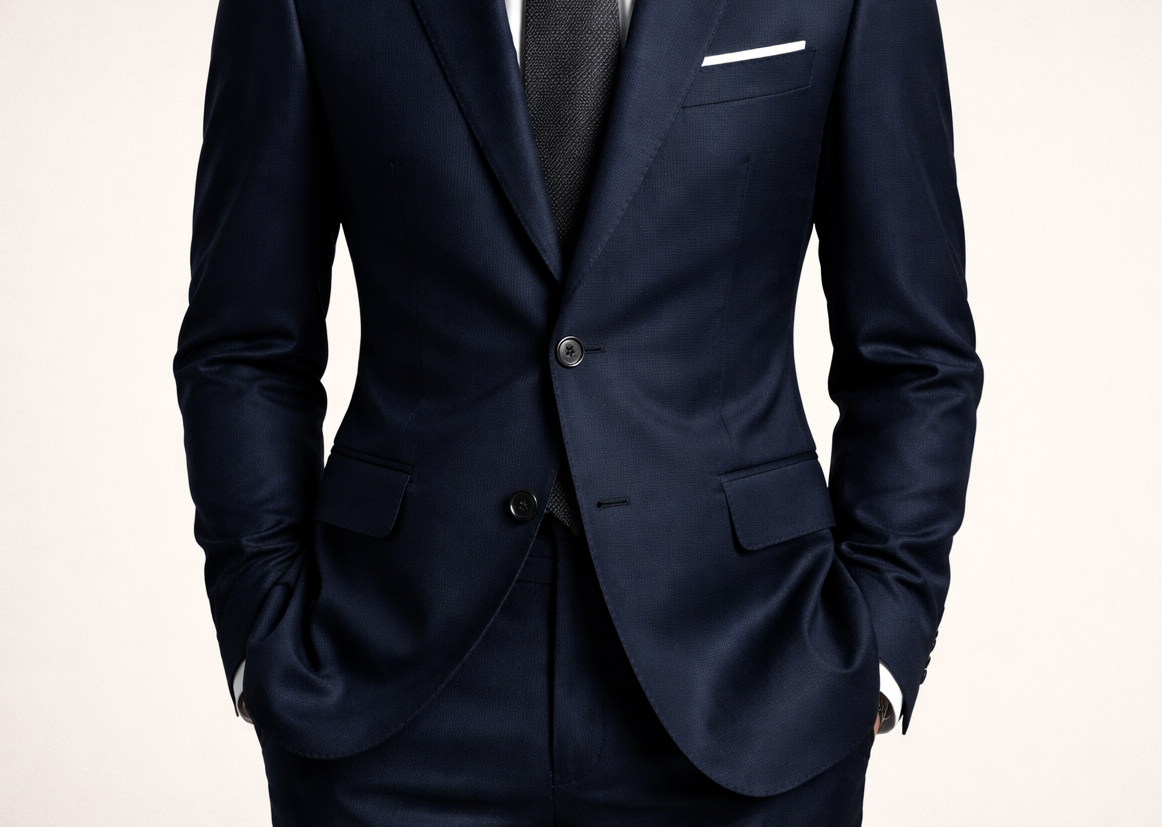
Single Breasted — 2 Button
The most popular and universally flattering. The top button sits at or just above your natural waist. Only fasten the top button, never the bottom. This works for every occasion and every body type.
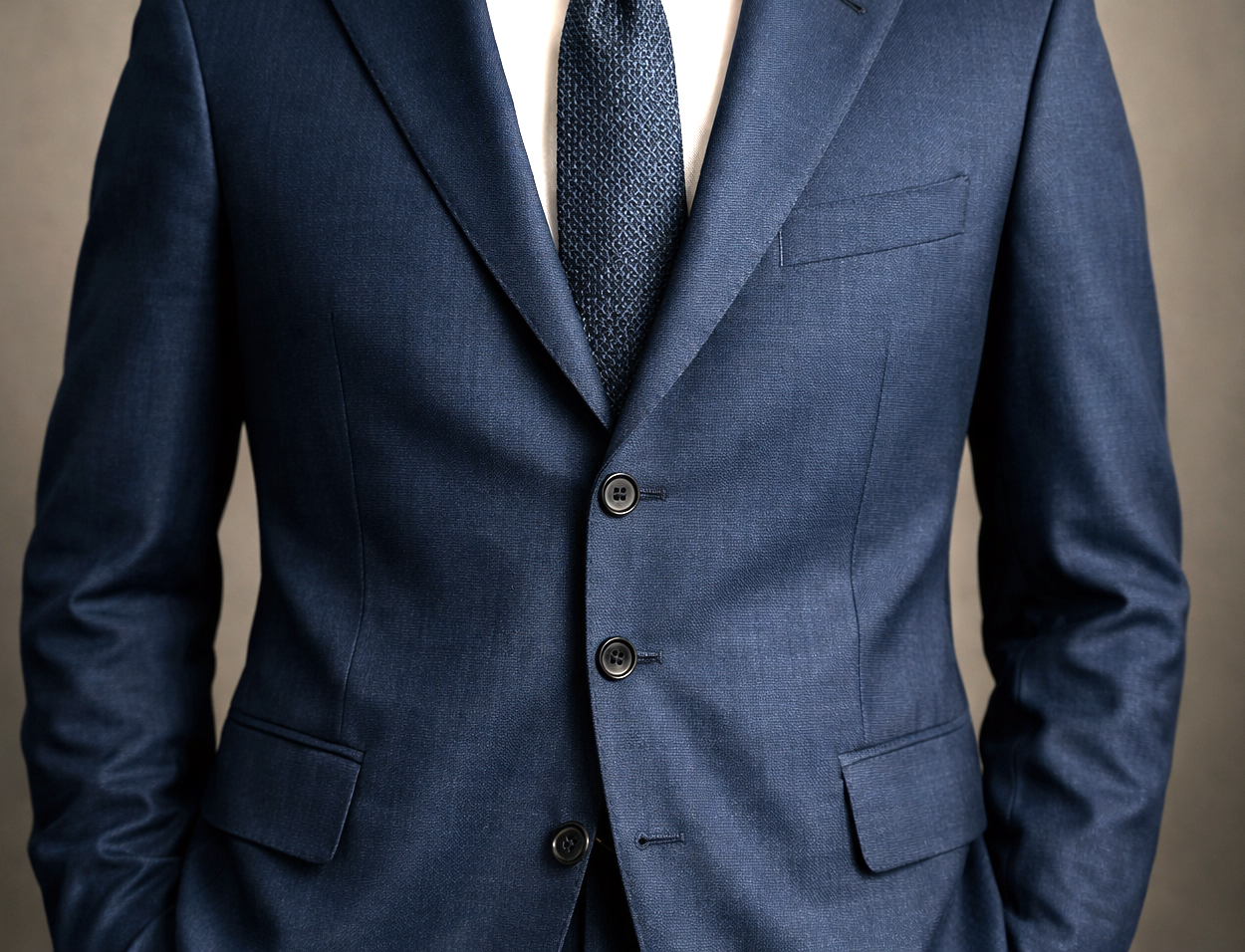
Single Breasted — 3 Button
The extra button raises the fastening point, which covers more of the shirt and tie. This elongates the torso and suits taller frames. Fasten the middle button always, the top sometimes, the bottom never.
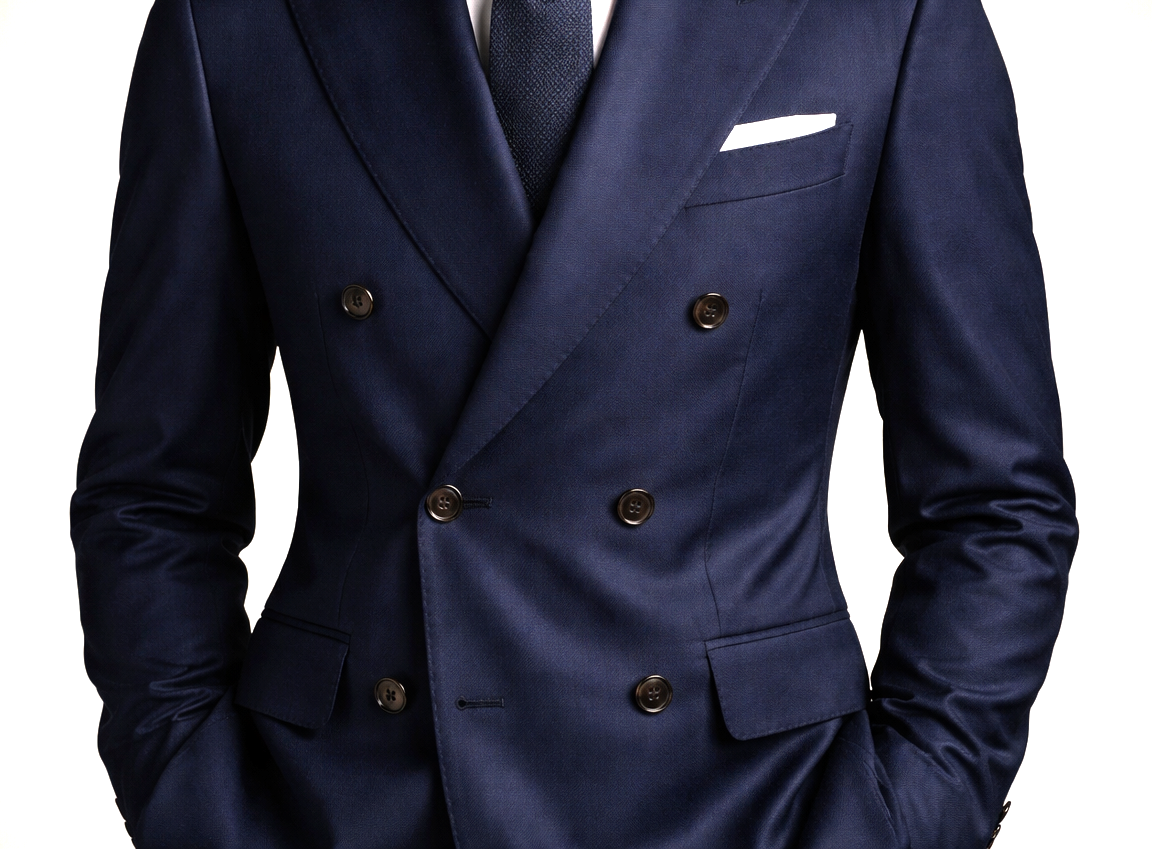
Double Breasted
Two columns of buttons with an overlapping front. This is a bolder, more formal choice. It adds visual weight to the chest and looks especially sharp with peak lapels. Keep it fastened when standing.
The simple rule
If the button pulls or creates an X-shaped crease when fastened, the jacket is too tight at the waist. If it gaps open and flaps, it's too loose. When buttoned, the fabric should lie flat and smooth.
04
The Trousers
Fit below the jacket matters just as much
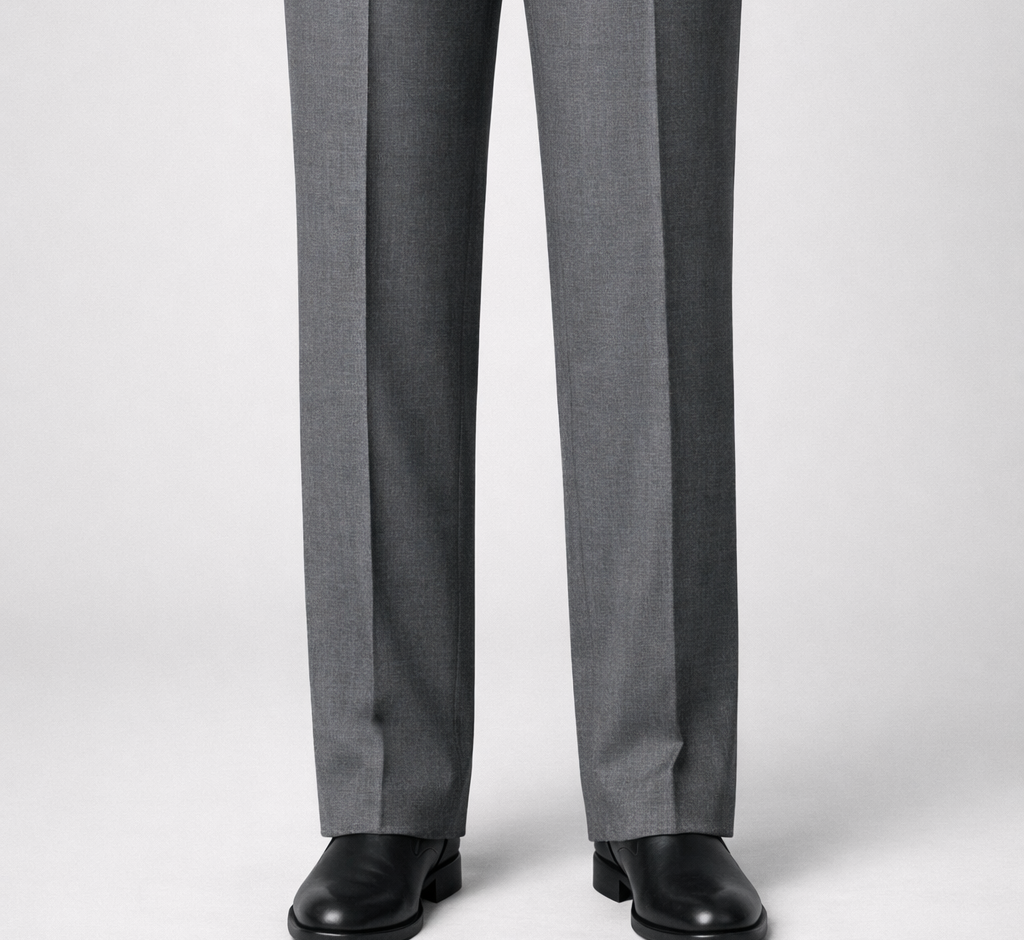
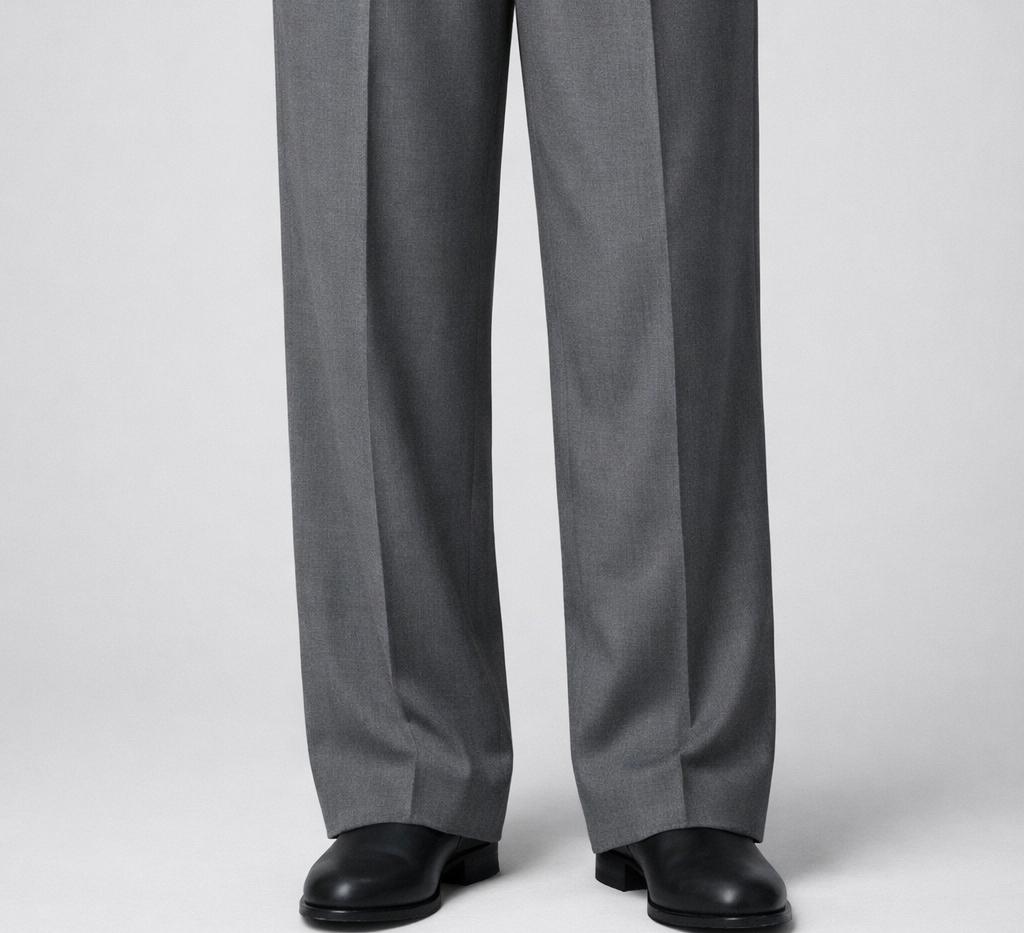
Most people focus on the jacket and treat trousers as an afterthought. That's a mistake. The way your trousers fit — how they sit at the front and how they shape from thigh to ankle — is half the picture. Here are the choices that matter most.
Front Style
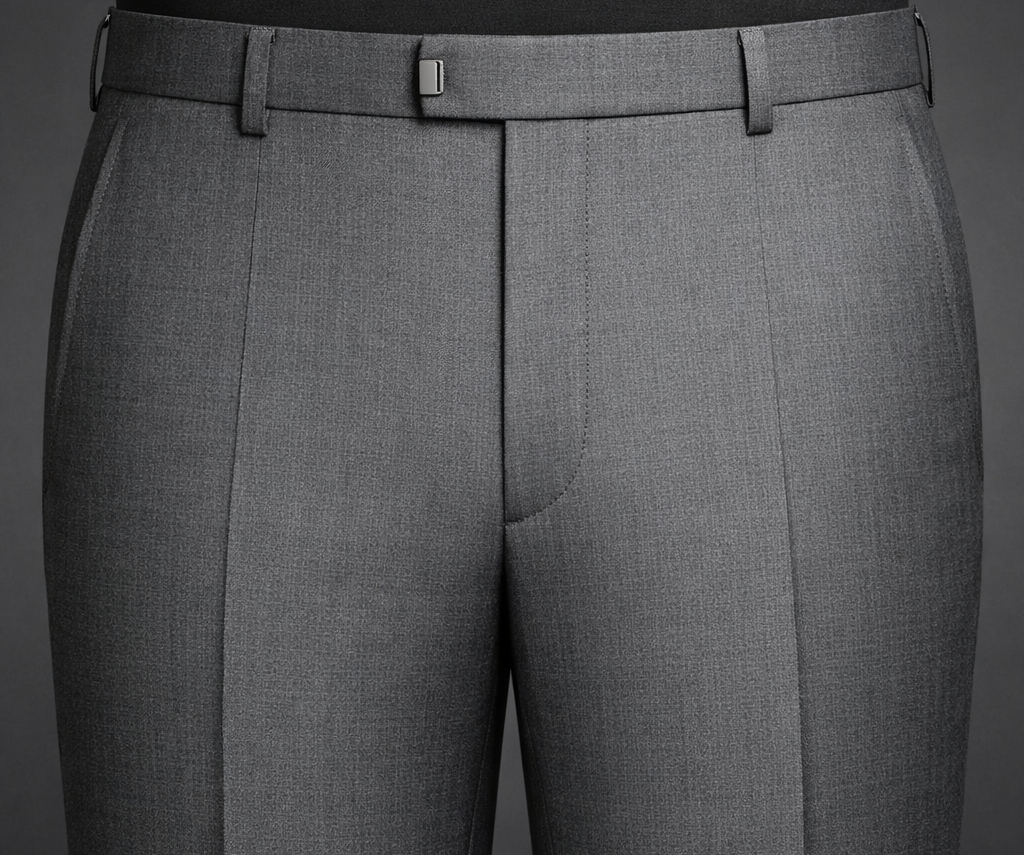
Flat Front
No folds at the waist — clean, smooth, modern. This is the slimmer, sharper choice. Works best with slim or tapered fits.
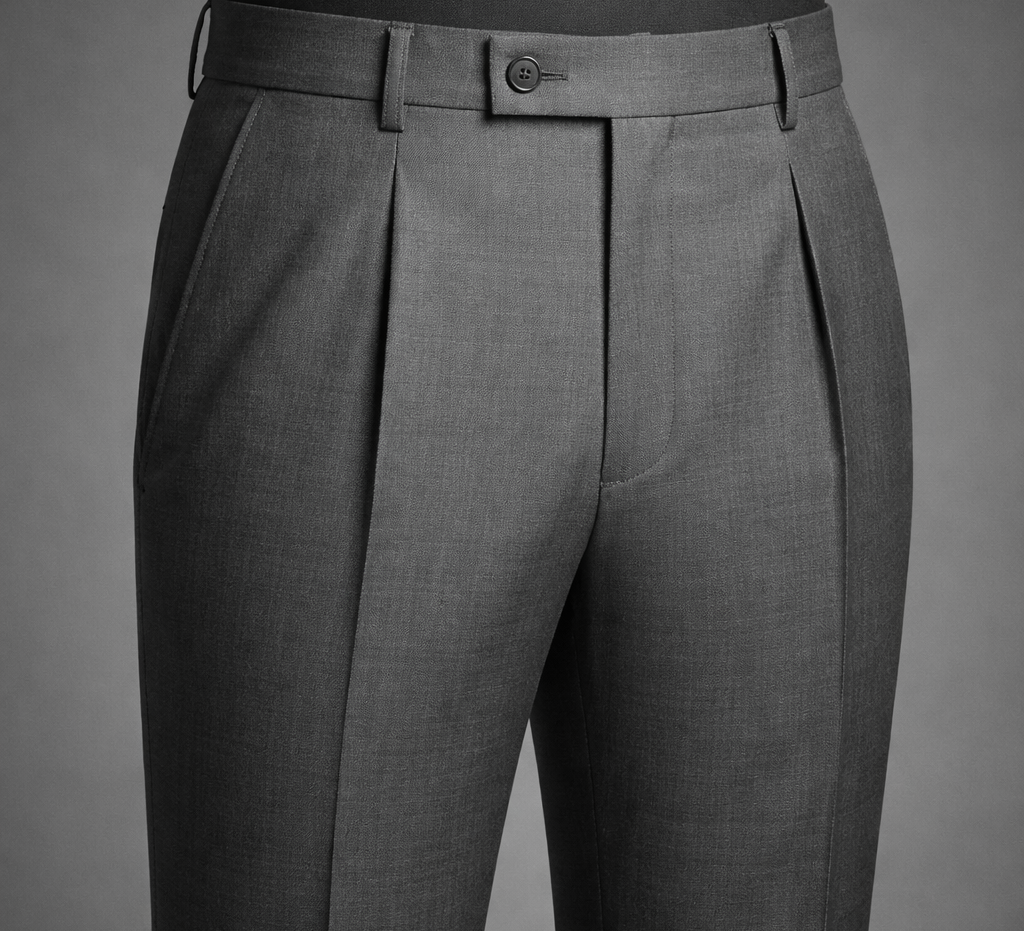
Single Pleat
One fold on each side. This gives you more room through the thigh without looking baggy. More comfortable when sitting and moving. A good balance of style and function.
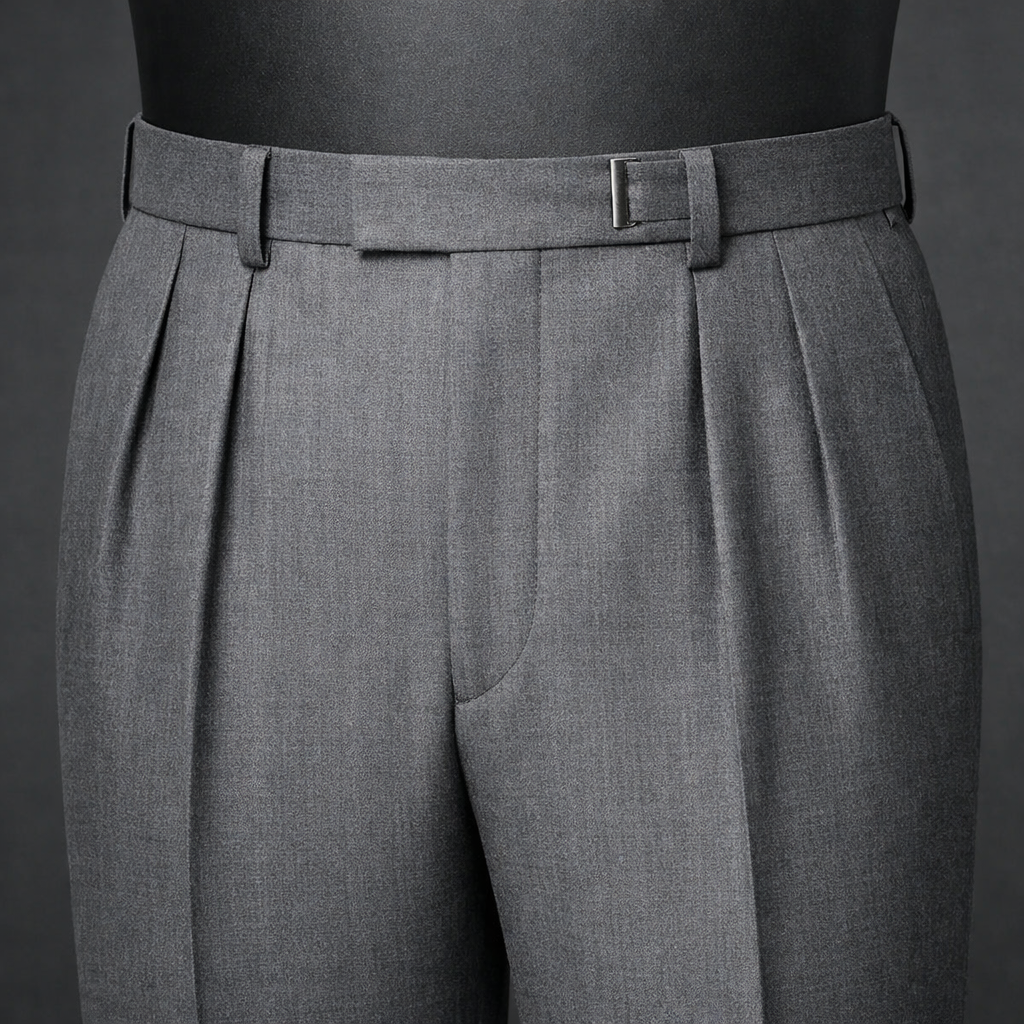
Double Pleat
Two folds on each side. The most generous cut — classic, elegant, and very comfortable. This pairs beautifully with a wider leg and higher waist. It's a timeless, old-school choice.
Trouser Fit
Slim Fit
Narrows from thigh to ankle for a clean, sharp line. The most modern silhouette — shows the shape of the leg. Works best with flat-front trousers and shorter jacket lengths.
Straight Fit
The same width from thigh to hem — no taper, no flare. Balanced, classic, and the most versatile option. Works with every body type and pairs easily with any jacket style.
Loose Fit
Full and flowing from hip to hem. More fabric means more drape, more movement, and more comfort. This is the classic menswear silhouette — it looks especially good with pleats and a higher waist.
Quick tip
If you add cuffs (a folded hem at the bottom), they add a small amount of weight that helps the trouser hang straight — especially useful with lighter fabrics like linen that tend to move around.
05
The Shirt
The layer closest to you — every detail counts
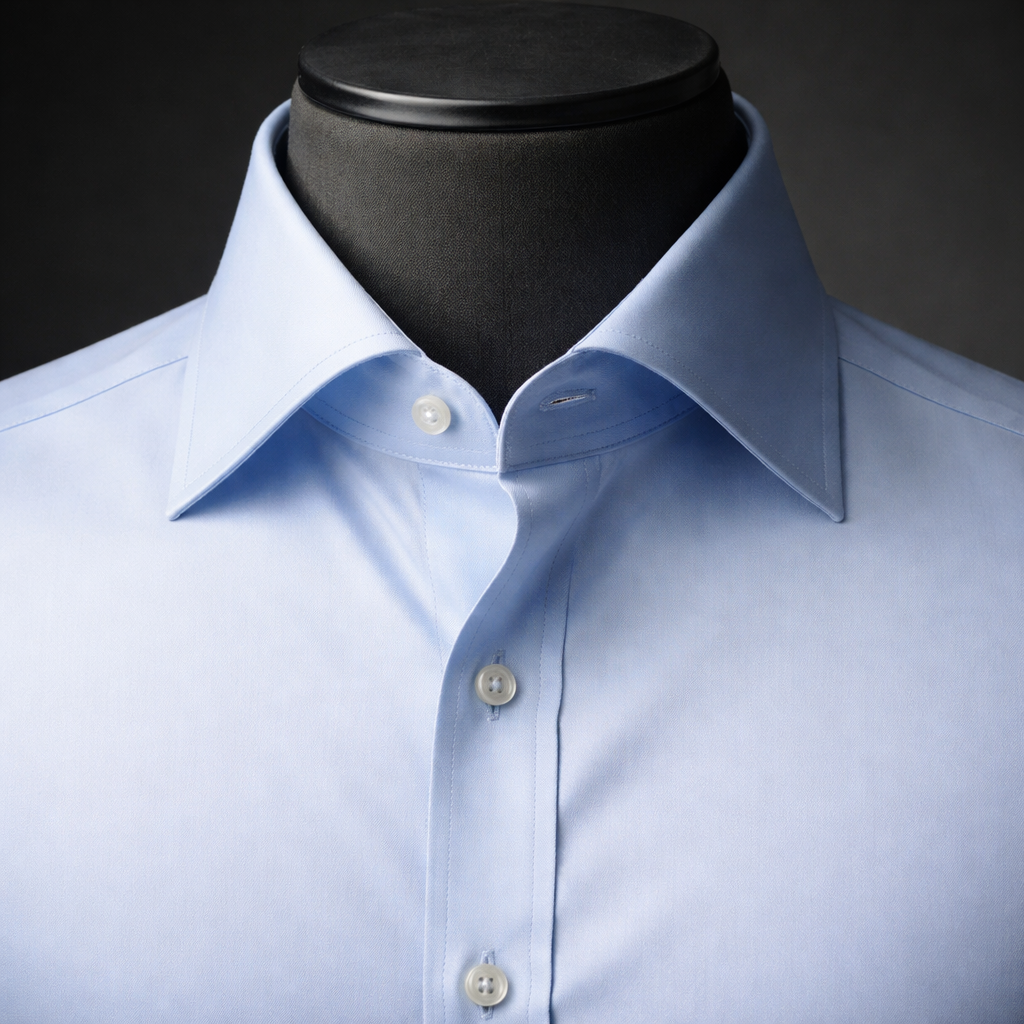
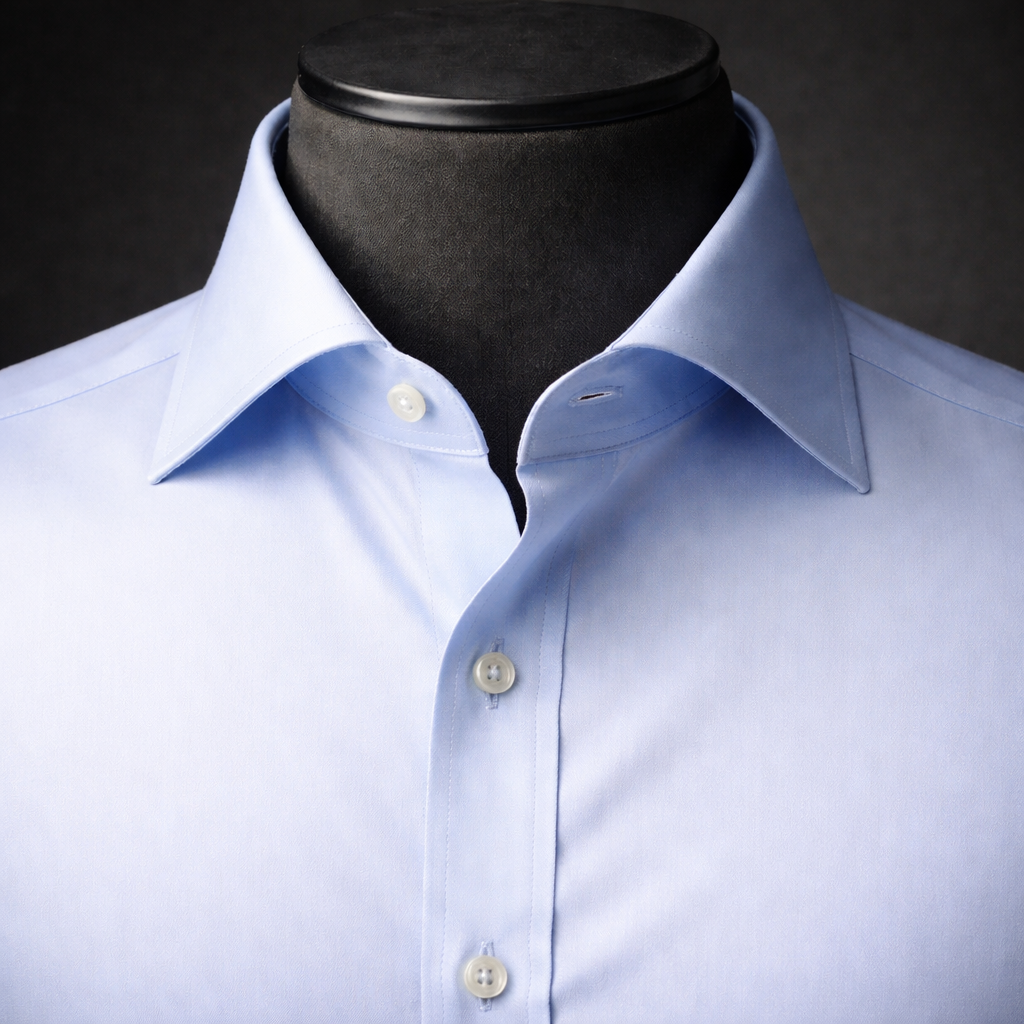
A bespoke shirt isn't just about fit. The collar style, the cuff type, the way the front buttons are set — each of these small details adds up to something that either feels considered or careless. Here are the choices that matter most.
Collar Styles
Normal
The collar points are angled wide apart. Works well with most tie knots and complements rounder faces. The most popular choice.
Cutaway
Even wider than a spread — the points angle almost horizontally. Looks great with a thick Windsor knot or even without a tie. Modern and confident.
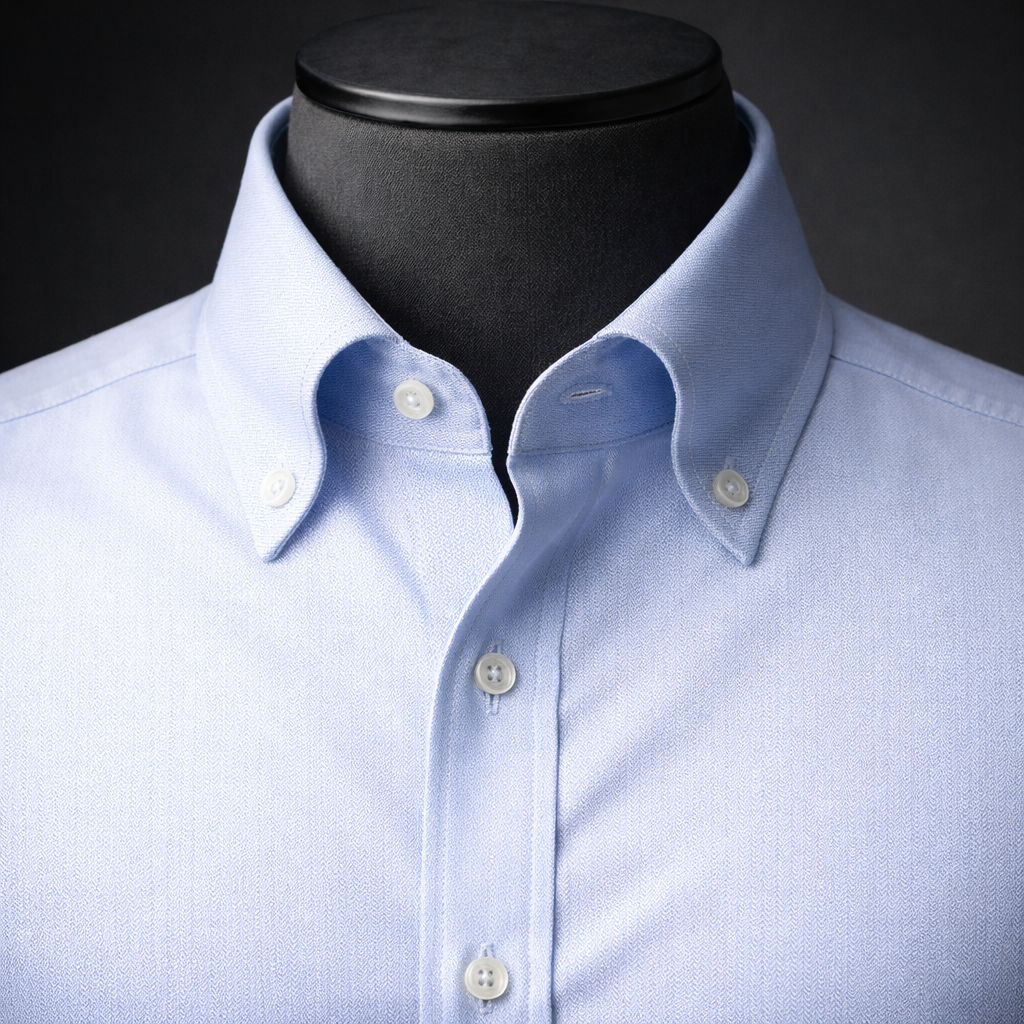
Button-Down
The collar points are held down with small buttons. This is the most casual option — great for wearing without a tie. It has an American, preppy heritage.
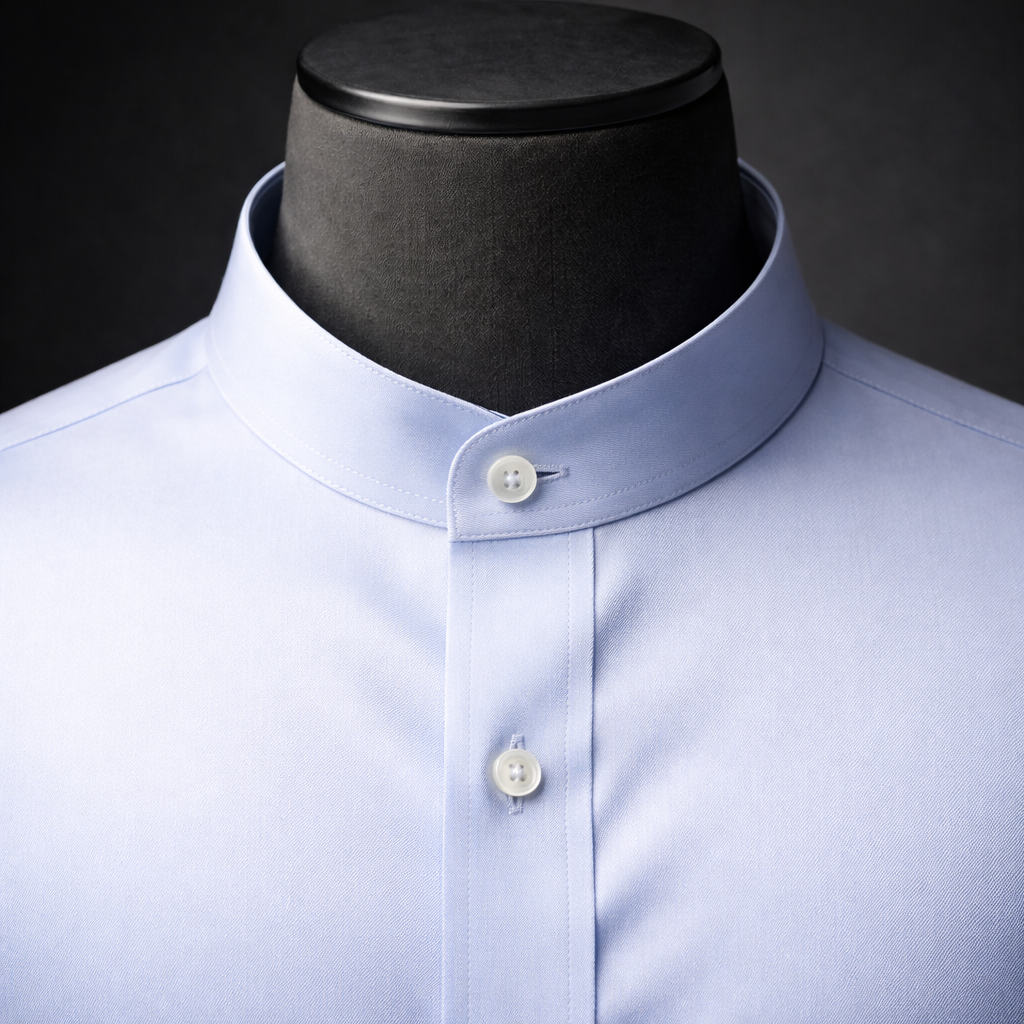
Mandarin
A short, standing collar with no fold — it rises straight up around the neck. Clean, minimal, and works beautifully under a bandhgala or on its own.
Cuff Styles
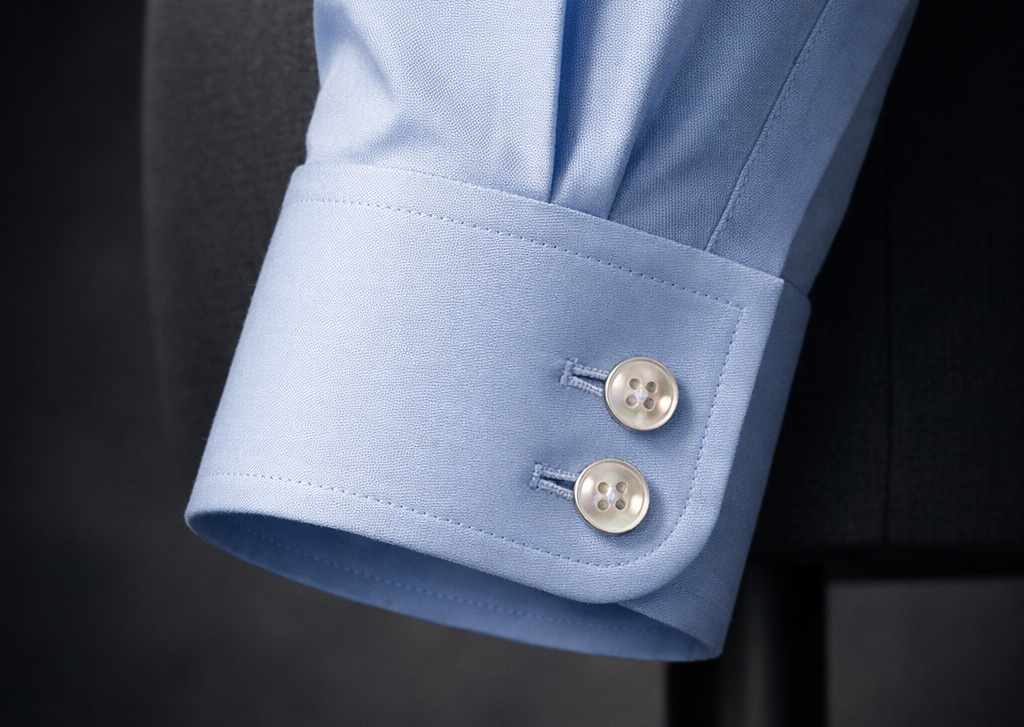
Barrel (Single)
The standard cuff that fastens with one or two buttons. Simple, versatile, works for any occasion from office to casual.
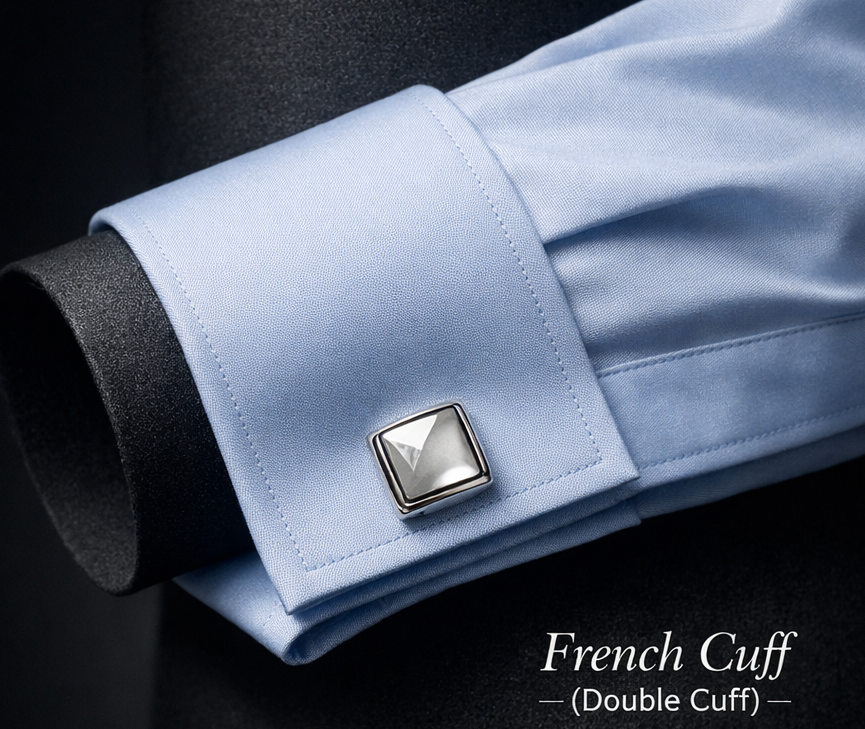
French (Double)
The cuff folds back on itself and is held together with cufflinks instead of buttons. More formal, more elegant — a chance to add a personal touch with your choice of cufflinks.
The small detail that speaks loudest
The buttons on a bespoke shirt are usually mother-of-pearl — made from actual shell. They catch light differently than plastic buttons. It's a tiny detail, but it's one of the first things someone notices up close. It signals that every choice was intentional.
Now that you understand the details — ready to choose yours?